
Cromwell’s Private Debt to the Past
Wolf HallThis thread follows Cromwell’s repeated encounters with the boy he was and the difficulty of distinguishing care from control.
increasing Bearing strength in each event
 decreasing
Bearing strength in each eventdecreasingA Boy at Lambeth
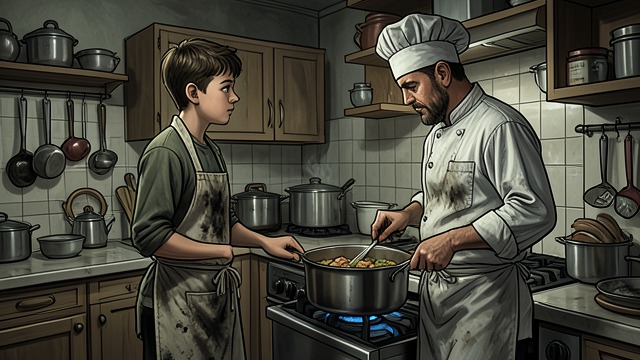
Learning by Watching
A child in the kitchens
Cromwell spends time at Lambeth Palace, where his uncle works as a cook. He learns counting, observes household hierarchy, and listens to the talk of important visitors.
Early ambition
He watches pages receive education and wonders what separates them from kitchen children. The experience gives him a lifelong attention to systems of service and opportunity.
The Child at the Execution
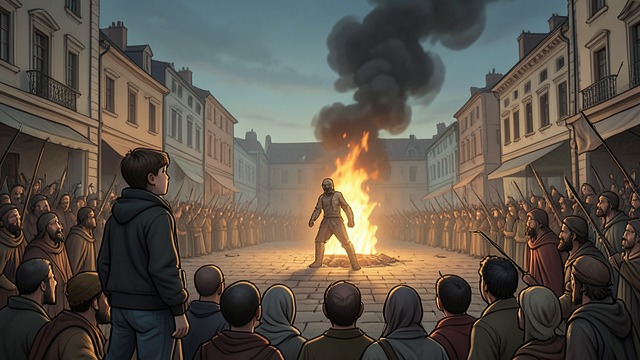
Witness to Burning
A public spectacle
As a boy, Cromwell watches an elderly religious dissenter burned. He asks what her crime is and sees the crowd’s appetite for punishment.
A mark on the adult
The memory remains difficult to connect to other parts of his childhood, yet shapes his understanding of how institutions teach cruelty. He does not tell the story freely.
Remembering the First Escape

The Past Returns
A lifetime in fragments
Cromwell remembers Walter’s threats, the forge, the river, and the day he left. These memories do not form a smooth account but recur through objects, smells, and sudden images.
Survival becomes method
He learned to anticipate danger and make himself useful. The method helps him rise, but leaves him alert to threats long after he has escaped the household that formed him.
Around 1490
Around 1490
1534–1535
